
Problem statement: unmanaged outdoor space undermines revenue and safety
Outdoor areas meant to generate revenue—patios, rooftop bars, and hotel terraces—often underperform because they’re exposed to weather, inconsistent shading, and rising energy costs. Operators confront frequent closures, unhappy customers, and higher HVAC loads. One practical remedy gaining traction is a solar pergola, which combines weather protection with on-site energy generation, but choosing the right design requires solving site-specific constraints rather than hoping a standard canopy will do.
Why this matters: consequences for operations and compliance
Uncontrolled sunlight and precipitation reduce usable hours, drive seasonal staffing swings, and increase maintenance costs. Poorly designed structures can violate local building codes or fail under wind and snow loads, creating liability. Decisions about materials, structural anchors, and electrical integration directly affect insurance, permitting and long-term operating expense—so the problem is both operational and regulatory.
Practical solutions: design choices that solve core problems
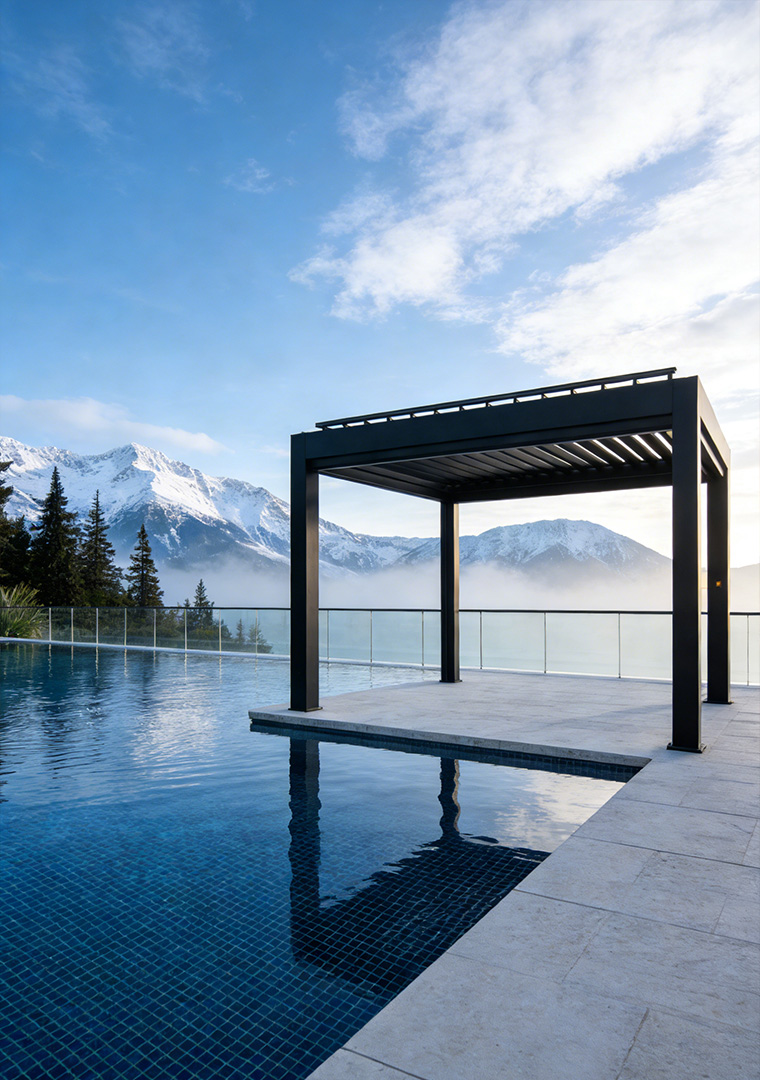
Address exposure with a clear, prioritized list: define desired occupancy hours, assess wind and snow loads, and specify desired energy offset if solar is included. Louvered or fixed-roof systems work differently—louvered roofs give daytime ventilation; fixed roofs protect from rain and allow straightforward solar mounting. Steel frames resist heavy loads; aluminum resists corrosion in coastal settings. Integrating photovoltaics reduces grid draw and can extend evening service when paired with battery storage.
Technical considerations and common pitfalls
Skimping on structural calculations is the most common mistake. Verify wind-factor, snow-load, and uplift with an engineer. Avoid shallow anchors on soft soils; choose driven piles or concrete pads as required. For solar integration, confirm roof tilt, shading analysis, wiring paths, and inverter placement early—retrofits drive up cost. Check finish warranties, fire ratings, and local utility interconnection rules before signing contracts.
Alternatives and trade-offs
Freestanding pergolas offer flexibility but need more footprint and stronger foundations. Attached pergolas can use existing walls for support but transfer loads that may exceed the host structure’s capacity. Retractable canopies increase adaptability but introduce moving parts and higher maintenance. Passive shading is lower cost; active (louvered photovoltaic) systems add energy benefits but increase upfront capital and technical complexity.
Experience, evidence, and a real-world anchor
Field experience shows projects that pair robust engineering with clear operational goals deliver the best ROI. City programs that expanded outdoor dining post-2020—most notably New York City’s Open Restaurants initiative—forced rapid, large-scale deployment of shade and weather structures, creating an informal case study in permitting, durability needs, and energy integration. For firms and designers working at scale, evaluating suppliers through the lens of supply reliability and technical documentation is essential; consult a trusted pergola business that can share engineering templates and site histories rather than only sales brochures.
Buying checklist and decision framework
Make procurement decisions using five concrete checks: 1) Site load report and soil/roof analysis; 2) Clear performance targets (hours of use, energy offset); 3) Material and finish specs tied to warranty terms; 4) Electrical integration plan including string sizing, inverters, and battery needs; 5) Permitting and insurance confirmations. Require a schedule with milestone-based payments and an as-built package covering structural calculations and electrical diagrams.
Conclusion: align solutions to the operational problem and expected outcomes
Operators should treat pergola selection as an engineering and operations decision: define the problem, pick the structural and solar approach that solves it, and insist on verifiable documentation. When design choices match use-case constraints and regulatory requirements, the result is more usable space, predictable costs, and lower risk—outcomes that experienced suppliers such as Light Hunter routinely document in project records.