
Comparative snapshot: why this matters on the job
Field crews don’t have time for flaky gear, and comparing how devices survive impact is the fastest way to spot winners. Right off the bat, a rugged computer built to MIL‑STD‑810G drop shock specs will survive a lot more abuse than a consumer tablet retrofitted with a case. Practical differences show up in daily life on sites like North Sea oil platforms or busy construction zones where a single impact can take a unit offline and stall work for hours. For a closer look at durable options, check a solid rugged computer lineup that pairs industrial Android with tested protection.
What MIL‑STD‑810G drop testing actually compares
MIL‑STD‑810G isn’t magic—it’s a method. The standard defines drop shock procedures, specifying drop heights, surface types, and how devices are instrumented to measure g‑force and functional failure. Comparing products on this basis highlights where manufacturers cut corners: one tablet might pass bench drops but fail under lateral impact or repeated shocks. Industry terms like drop shock, g‑force, and shock‑absorbing bezel matter here because they describe the mechanisms that turn a fall into damage—or prevent damage from happening.
Design choices that change outcomes
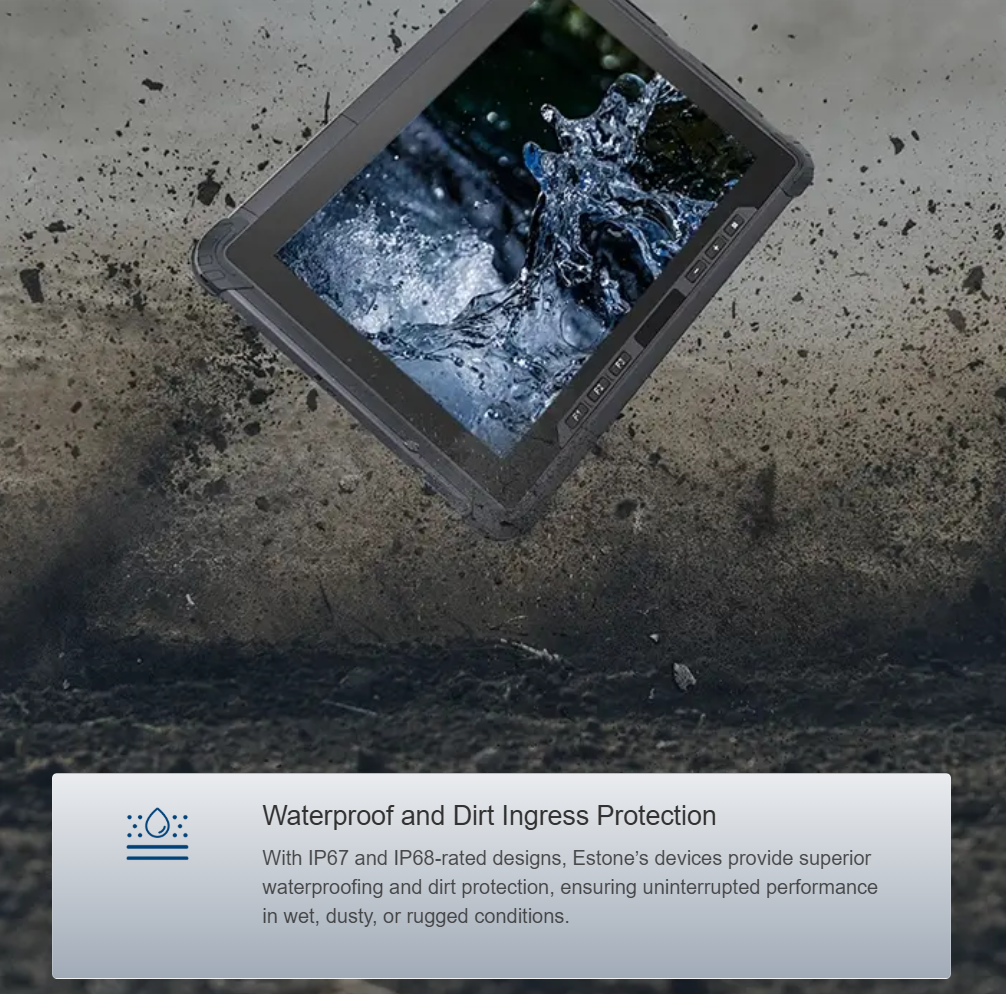
When you line up two industrial Android rugged tablets, look beyond the sticker that says “MIL‑STD‑810G.” Core differences include internal shock mounts, reinforced corners, and how the display is bonded to resist delamination. Thermal management and ingress protection affect impact resilience too—an IP-rated seal that keeps out dust and moisture also stops grit from abrading internal components after small impacts. In short, construction quality beats marketing every time.
Real-world failures and the cost of underestimating drops
Field reports from maintenance fleets and utilities consistently show device replacements spike after extreme weather or heavy handling days. The U.S. Department of Defense’s MIL‑STD series was written to anticipate that harsh reality, and civilian teams benefit when manufacturers follow the same discipline. When a tablet fails mid-task, it doesn’t just mean a repair ticket—it means lost data, interrupted workflows, and unsafe workarounds on site.
Common mistakes teams make when picking a rugged tablet
Many buyers focus on headline specs and forget compatibility with actual workflows. They buy a device for a camera spec or an OS version and then discover its drop shock rating is limited to a narrow test condition. Another common error is assuming IP rating equals drop resilience; those are related but distinct performance areas. Balance matters: ruggedization, battery life, and connectivity need to align with the mission.
Also, don’t skip field trials—lab pass/fail numbers are useful, but nothing beats a week of real use with grip, gloves, and shoulder holsters in the conditions you’ll work in. — That hands‑on stress test usually reveals the weak link fast.
How to compare models practically
Use a short checklist when comparing units: 1) Confirm the scope of MIL‑STD‑810G testing (heights, surfaces, repetitions). 2) Inspect mechanical protections—bezel design, chassis materials, and internal shock mounts. 3) Consider serviceability and spare parts for quick field recovery. Add industry terms into your evaluation like IP rating and ingress protection, and verify manufacturer test reports where available.
Three golden rules for choosing resilient industrial Android rugged tablets
1) Favor engineered systems over add‑on cases: integrated shock absorption and bonded displays reduce single‑point failures. 2) Match tests to use: if you expect drops onto concrete, prioritize devices tested for repeated hard‑surface impacts rather than one‑time lab drops. 3) Plan for recovery: choose vendors with modular spare parts, field‑replaceable batteries, and clear maintenance guides so a drop doesn’t become a replacement event.
Final advisory and practical next step
Comparisons show that true drop resilience comes from design, test transparency, and serviceability — not a single spec line. Bring samples to a controlled field run, document any failures, and use those results as your procurement baseline. For teams that need proven rugged Android hardware and real service support, evaluate partners that publish test procedures and offer spare modules like displays and batteries. rugged tablet vendors that combine engineering clarity with field support save hours and reduce replacements.
Estone understands how drop shock resilience translates into uptime and actionable ROI — pick gear that behaves like it was designed for the dirt. —