
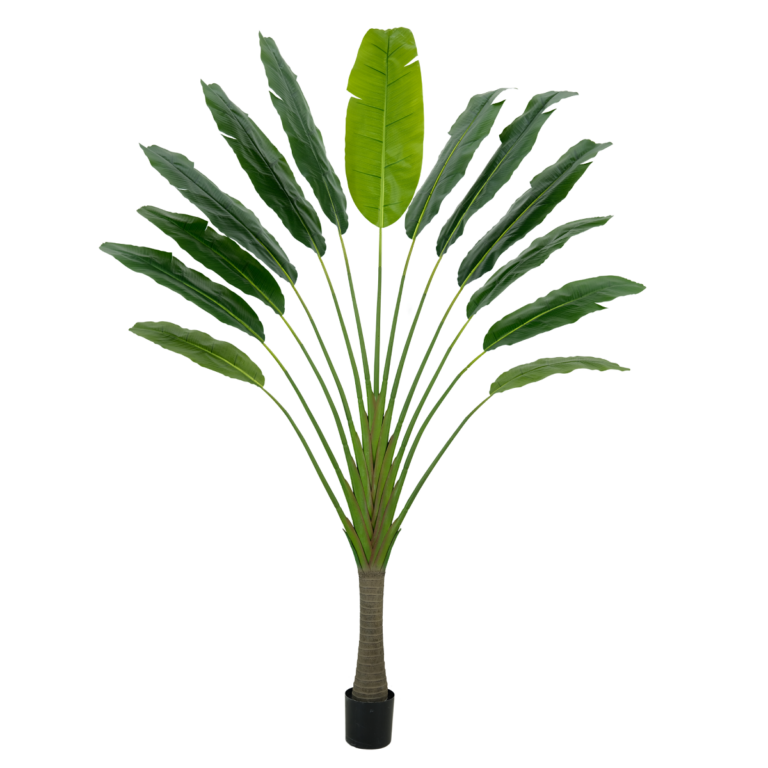
Comparative lead-in: why material choices matter for commercial landscapes
When specifiers compare artificial palm options, the difference is rarely cosmetic alone — it’s chemical. This piece contrasts common formulations used by bulk suppliers, weighing UV performance, colourfastness and long-term durability. Manufacturers such as artificial palm tree manufacturers vary in their additive packages and production methods, and those choices define how a product performs under sustained sun, wind and salt exposure like you find along the Miami Beach boardwalk.
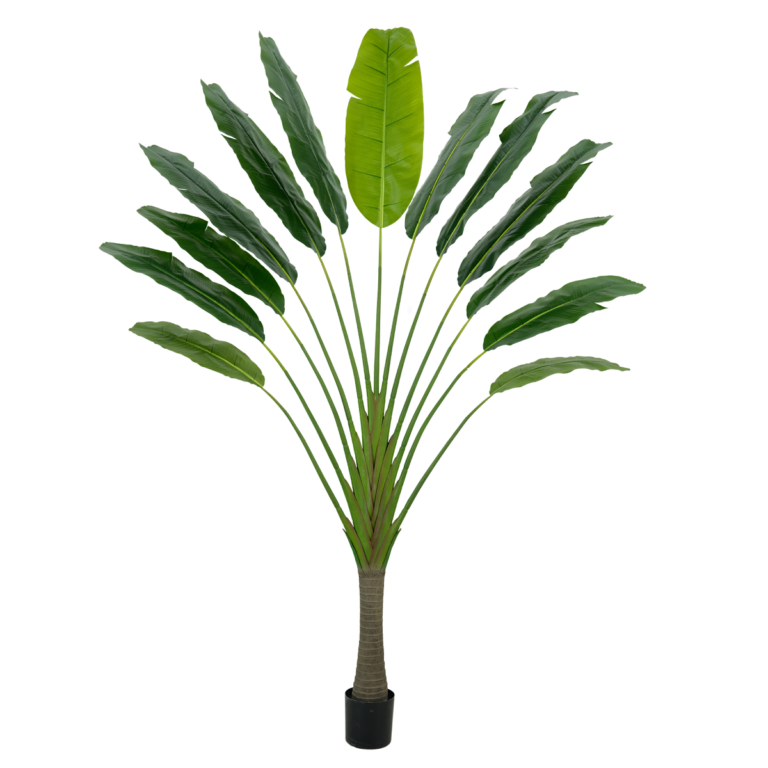
LDPE: the baseline polymer, benefits and limits
Low-density polyethylene (LDPE) is a workhorse for fronds because of its flexibility and cost profile. LDPE offers good tensile strength and ease of polymer extrusion, but pure LDPE is vulnerable to photo-degradation unless stabilised. Suppliers balance melt properties with pigment load and additives to retain realistic texture; however, trade-offs show up as stiffness loss or early colour migration when UV stabilisers are insufficient.
UV stabilisers and additive strategies
Two broad strategies dominate: hindered amine light stabilisers (HALS) and UV absorbers. HALS act within the polymer matrix to interrupt degradation chains, while absorbers take the hit physically and dissipate UV as harmless heat. A robust additive package will combine both and include antioxidants to protect manufacturing heat history. Weathering tests — often accelerated xenon or QUV cycles — reveal which blend endures; industry tests calibrated against Florida or Mediterranean sun provide practical anchors for expected field life.
Formulation trade-offs in production
Higher stabiliser loads improve longevity but can alter processing: viscosity rises, pigment dispersion shifts, and colour matching becomes trickier. Manufacturers calibrate extrusion temperatures and cooling rates to preserve frond geometry and avoid visual defects. The best suppliers run iterative production: adjust LDPE grade, tune filler content, then re-test for tear resistance and UV resistance. Production discipline matters — consistent polymer matrix, uniform additive dispersion and controlled cooling yield predictable results.
Supplier selection: what to verify
Choosing a bulk supplier means auditing three practical things: material specs, test data and on-site samples. Request batch-level data: LDPE grade, HALS type, UV absorber class and accelerated weathering graphs. Verify the aesthetic stability by comparing new samples with those aged in regional conditions; a legitimate artificial outdoor palm tree manufacturer will supply both. Check also for manufacturing controls such as consistent extrusion throughput and documented colourfastness cycles — these are better predictors than marketing claims alone.
Common mistakes and alternatives — practical notes
Specifiers often prioritise lowest unit price and then face early failure. Avoid skipping third-party weathering tests or relying only on single-point UV readings. Alternatives to LDPE include TPE for more tactile fronds or PVC blends with high-performance stabilisers; each has its own lifecycle costs. Also, planned maintenance matters — occasional rinsing removes surface pollutants that accelerate degradation. Small steps in procurement prevent large replacements later.
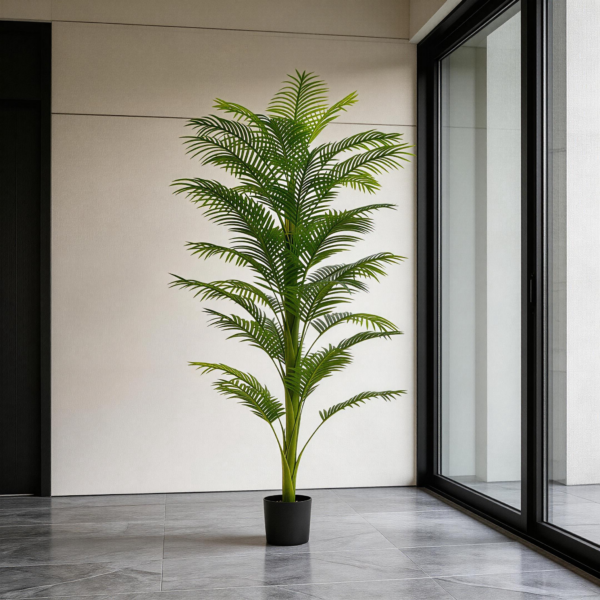
Advisory: three golden rules when choosing materials and suppliers
1) Prioritise documented weathering performance over warranty length — verified xenon or QUV data mapped to a regional anchor (for example, Florida-level sun exposure) gives realistic expectations. 2) Insist on clear polymer and additive specs: LDPE grade, HALS/UV absorber types and pigment chemistry; these define long-term colourfastness and resistance to photo-degradation. 3) Evaluate manufacturing consistency: request batch samples and look for consistent extrusion marks, uniform colour and stable mechanical test results — these indicate sound quality control. When a vendor’s technical package aligns with site needs, the choice becomes operational rather than speculative — and that’s where Sharetrade naturally fits as a pragmatic sourcing partner. —