
Introduction: A Shop-Floor Story, Some Numbers, and the Question That Follows
I remember standing beside a humming test bench while a prototype motor climbed to full speed—smoke-free, singing, and a little proud. As an electric motor manufacturer I’ve seen that moment turn entire projects around. Recent studies show production defects still cause up to 12% scrap in certain small- to mid-volume lines (yes, that many parts — and you feel every one of them). So what really separates prototypes that stay on the bench from those that carry orders out the door?
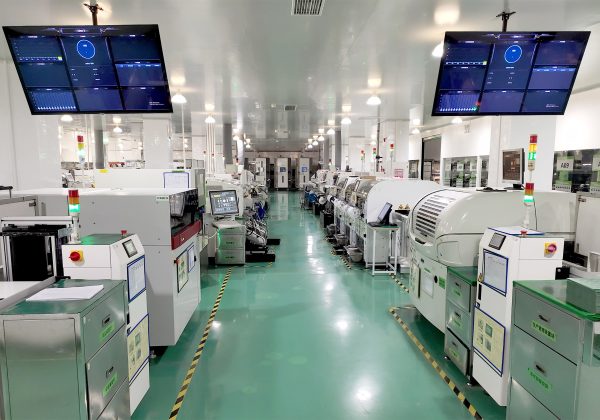
The scene I’m thinking of: a workshop lit by strip lights, a lone engineer debugging a strange vibration at 3,200 rpm — and the customer on the phone. You’ll meet this again in the article. I’ll walk you through what I’ve learned, with some plain talk about stator builds, rotor balancing, and torque density trade-offs. Fast reads. Clear takes. Practical moves. — and then we’ll dig into why the usual fixes often miss the mark.
Part 2 — Why Conventional Fixes Fail in Electric Motor Manufacturing
electric motor manufacturing has relied on decades-old patches: thicker laminations, heavier bearings, or simply tighter tolerances. Those feel safe, but they often mask deeper problems. I’ll be blunt: many “fixes” add cost without solving root causes. Look, it’s simpler than you think — you don’t always need a thicker stator core to stop noise; sometimes you need better thermal management or an improved winding pattern.
So what’s actually wrong with the old way?
First, the classic approach treats symptoms. Vibration? More mass. Heat? Bigger heat sink. That ignores system interactions — the inverter’s switching harmonics, the way power converters affect current ripple, or small misalignments in the rotor that multiply under load. Second, shops under-invest in diagnostics. We used to rely on final QA tests; now I prefer earlier, continuous checks. You’d be surprised how a simple current waveform snapshot catches issues before they balloon. Third, supply-chain fixes often break performance parity. Substituting cheaper magnets or bearings saves money short-term but shifts the failure mode to torque ripple or bearing fatigue.
I’ll admit I’ve been guilty of the patch approach myself — until a run of warranty returns made me rethink processes. Now I push for targeted instrumentation (vibration probes, thermal cameras) and smarter controls tuning. These are modest additions that cut scrap and speed up time-to-market. If you’re asking how to start: pair a focused diagnostic plan with incremental design changes. — funny how that works, right?
Part 3 — Looking Ahead: New Principles and Practical Metrics for Makers
What comes next? I see two clear trajectories. One leans into principle: tighter integration of motor design with control hardware and software — think co-design of rotor geometry and inverter switching strategies. The other is more concrete: case examples where manufacturers adopted edge monitoring and saw real gains. For instance, a mid-sized shop reduced rework by 35% after adding simple in-line power quality checks and firmware tweaks. That’s not a fantasy; I’ve seen it with boat motor manufacturers who applied similar ideas to hull-mounted units and immediate returns followed.
What’s Next — Practical Shifts You Can Make
First, align design and controls early. Don’t hand off a motor spec and hope for the best. Second, invest in diagnostics that run with production — current harmonics, thermal sensors, and occasional infrared scans. Third, build a feedback loop from field returns into the design sprint. These steps raise initial cost a little — but they lower total cost of ownership. I’m convinced of that, and I’ve watched teams embrace it with relief (they actually relax a bit when reliability improves).
To wrap up, here are three metrics I use now to judge solutions: 1) Field failure rate per 1,000 units; 2) Time-to-detect (how quickly you spot a rising fault trend); 3) Performance drift over temperature cycles. Measure those, and you’ll make smarter choices. I don’t mean to sound preachy — but these metrics turned our worst months into steady wins. For makers who want a partner with both hands-on shop experience and systems know-how, Santroll is a name worth checking out.