
Introduction: Counting the Cost of Poor Light
Have you ever wondered why some houses hit their weight targets and others stall, despite identical feed and genetics?
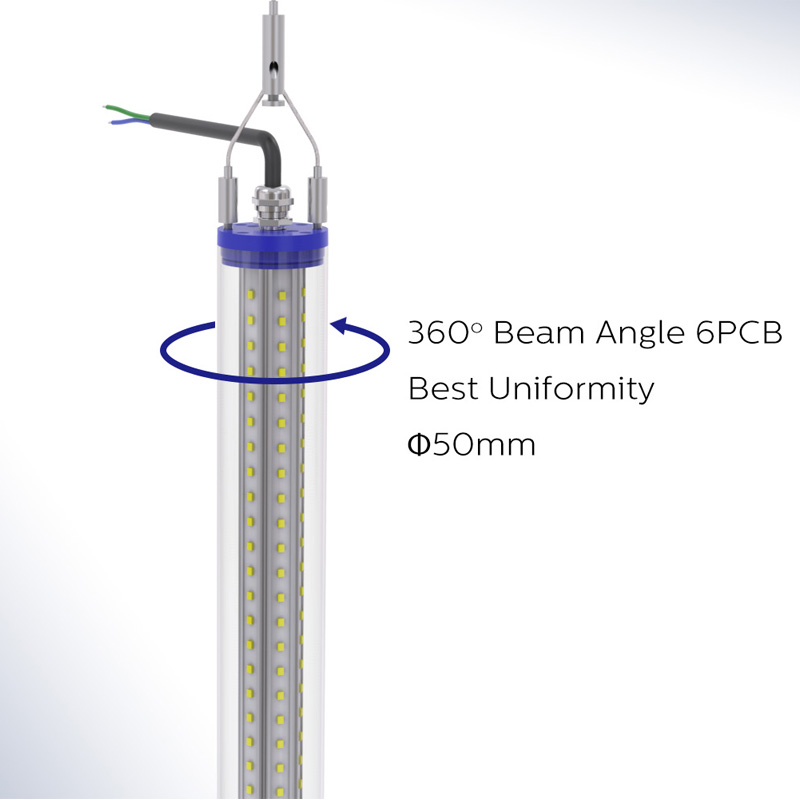
Broiler lighting plays a major role in flock performance — and I’ve seen companies lose 3–5% in feed conversion just because of inconsistent light schedules. From my experience working with integrators and farm managers, small lighting mistakes compound into real financial shortfalls (think: higher feed bills, slower turn-around). Industry data often shows that a tweak of the photoperiod or a modest uplift in lumen output can move the needle on daily gain. So what exactly are the weak links in typical approaches, and how should operators prioritize fixes to protect margin and throughput?
In the next section I’ll unpack the common failure modes. Then we’ll look at practical fixes you can evaluate quickly.
Where Standard Approaches Break Down
Why aren’t common programs delivering?
I link the problem directly to broiler chicken lighting programs because most farms buy schedules and hardware without testing how they interact. The standard playbook treats light like a static commodity: install fixtures, set timers, forget it. That’s where failures start. Photoperiod plans are prescribed on paper but rarely tuned for actual spectral distribution in the barn. I’ve measured cases where the published lux was nowhere near the delivered lumen output after wiring losses and aged drivers. Power converters age. Bulbs dim. And—funny how that works, right?—you only notice when growth slips.
Two deeper flaws stand out. First, lack of feedback: farms often don’t monitor real-time light intensity or color shift, so there’s no loop to correct drift. Second, one-size-fits-all schedules ignore flock age, house layout, and ventilation patterns. These blind spots hit bird behavior and stress thresholds. Terms like spectral distribution and edge computing nodes matter here because they tie into sensing and control. Look, it’s simpler than you think: if you don’t measure, you can’t adjust.
What Comes Next: Principles for Better Lighting Design
What’s next — practical principles?
Moving forward I favor simple, measurable principles grounded in newer control tech. Start with consistent metrics: target lux ranges by age, document spectral distribution across the house, and log photoperiod changes. Modern controllers support schedules that adapt to barn conditions, and edge computing nodes can keep local decisions fast when connectivity drops. I recommend pilots that test variable programs from broiler chicken lighting programs while tracking feed conversion, mortality, and leg health. We ran a 12-week trial where adding spectral tuning reduced leg issues and improved uniformity—measurable, not anecdotal.
Principle two: design for maintainability. Use quality drivers and power converters, and plan scheduled checks. No system stays optimal without simple upkeep—period. Also, integrate behavior data (activity cycles, aggression markers) into lighting decisions. That creates a loop from sensor to schedule back to outcome. — and yes, that matters.
Finally, when choosing solutions, evaluate them against three metrics I use on every project: 1) controllability (can you tune intensity and spectrum precisely?), 2) observability (do you get reliable light and behavioral data?), and 3) ROI horizon (how quickly will savings pay for the investment?). If you keep those three in mind, you’ll avoid the common traps and pick a solution that actually improves flock performance.
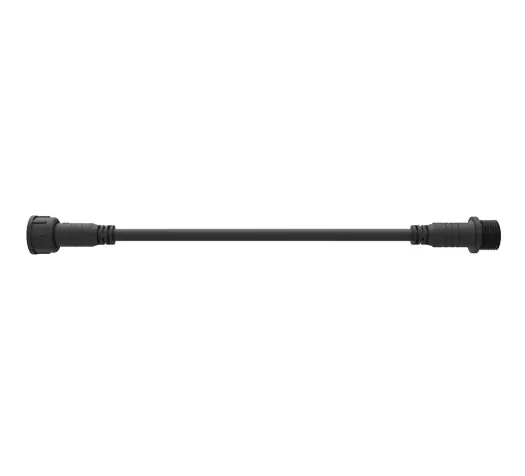
For trusted hardware and program options, I’ve worked with suppliers who understand on-farm realities — one of them is szAMB. I’m not promoting; I’m pointing to where I’ve seen consistent results. In short: measure, maintain, and choose metrics that matter. The payoff is steadier production and clearer decisions.