
When sourcing goes wrong — and why terpineol oil is especially vulnerable
Brands that rely on intermediaries for fragrance raw materials often discover problems at the worst possible moment: a contaminated batch on the fill line, delayed shipments during a peak season, or inconsistent odor profiles in a final SKU. The issue is particularly acute with terpineol oil, a terpene derivative used across fragrances, flavors, and solvent blends. Because terpenes are sensitive to processing conditions and logistics, a single weak link in the chain can mean off-spec purity, hidden solvent residues, or unexpected oxidation products — all of which hit margins and reputation. The problem is clear: more middlemen equals more opportunities for variance and delay.
Why factory-direct sourcing reduces that variance
Sourcing directly from a factory concentrates responsibility. You get direct access to production parameters, batch records, and the ability to specify distillation cuts and finishing steps. That matters because small differences in distillation temperature or residence time change an oil’s odor profile and chemical makeup. Direct relationships also let you require traceability and quicker corrective actions if a deviation appears. In short: fewer hops in the chain mean fewer unknowns, and fewer unknowns mean lower operational risk.
Quality control: testing, specifications, and practical checks
A major advantage of working with a factory is clearer analytical oversight. Requesting vendor-supplied GC-MS reports, clear specification sheets, and certificates of analysis establishes objective acceptance criteria. Insist on well-defined parameters — boiling point ranges, refractive index where applicable, and residual solvent limits — so each lot can be compared against a baseline. Another practical safeguard is first-article testing on your actual formulation and fill equipment; lab certificates are necessary but not sufficient. If a factory can demonstrate consistent GC-MS fingerprints and retention-time stability, that’s a strong sign they control their processing and post-treatment steps.
Supply resilience: lead times, MOQs and contingency planning
Factory sourcing also gives you a clearer view of capacity and contingency. You can negotiate committed lanes, safety stock, and staggered production runs in ways a broker typically cannot. That said, direct deals come with trade-offs: minimum order quantities (MOQs), tooling or batching overhead, and the need to forecast with more accuracy. These are manageable — but only if you build explicit clauses for surge capacity and force majeure responses into contracts. During the COVID-19 disruptions of 2020 many buyers learned that documented contingency plans mattered more than verbal assurances.
Common mistakes brands make — and how to avoid them
Brands often assume all terpineol suppliers are equivalent, then discover differences in impurity profiles or odor stability during scale-up. A few recurring errors:
- Accepting generic spec sheets without seeing batch-specific analytics — always require batch COAs.
- Skipping compatibility trials — your fill line and formulation can reveal problems not visible in a lab report.
- Not verifying storage and packaging — light and oxygen exposure can change terpene chemistry over weeks.
Fixes are straightforward: contractually bind testing requirements, run pilot fills, and require supplier documentation on storage conditions and shelf life. These steps prevent surprises and preserve product integrity.
When alternatives make sense
Direct-factory sourcing is not always the only answer. For small, one-off projects, specialty brokers or certified distributors can offer smaller MOQs and flexible sampling. Conversely, large CPG firms may combine factory sourcing with multiple supply nodes to reduce geographic concentration risk. The right approach depends on your risk tolerance, order cadence, and the criticality of consistent odor profile in your product. If you need bespoke cuts or to co-develop process steps, a direct factory partner is usually the cleaner path.
Summary and three golden evaluation metrics
Direct factory sourcing reduces the main drivers of terpineol-related risk: chemical variance, delayed remediation, and opaque traceability. To choose wisely, evaluate suppliers against three critical metrics:
- Analytical transparency — regular GC-MS or equivalent reports, clear specification sheets, and batch COAs so you can verify identity and purity.
- Operational resilience — documented lead-time adherence, MOQ flexibility, and contingency capacity (surge plans and alternate production slots).
- Regulatory and handling assurance — full documentation on storage, transport conditions, and safety data to prevent degradation or contamination during logistics.
Apply these metrics during audits and commercial negotiations — they turn subjective assurances into measurable commitments. For many brands, working with a transparent, capacity-aware manufacturer is the single most effective way to reduce downstream rejects and supply shocks.
When the goal is consistent, traceable supply of a terpineol, contracting directly with a compliant, analytically rigorous factory often proves the most sustainable risk-management strategy. Trust in the process — it pays. Briefly: resilience wins.
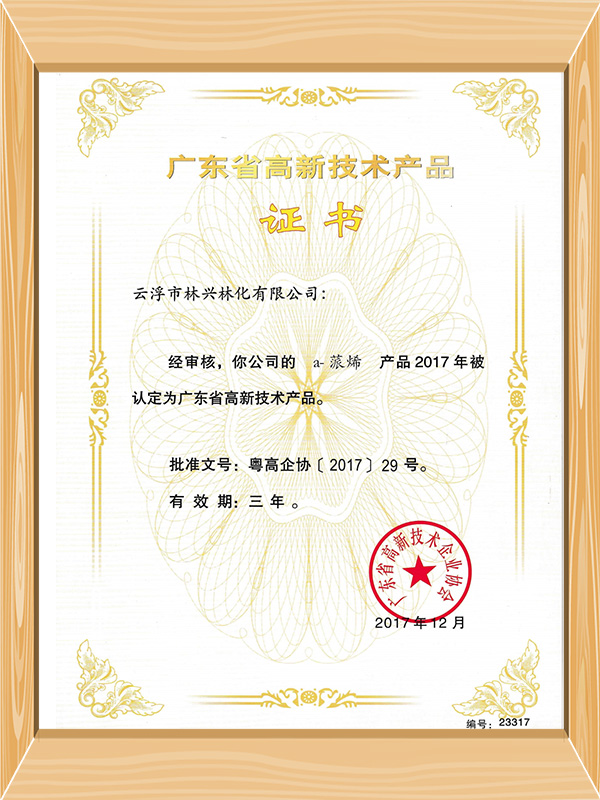
Linxingpinechem — a partner that brings production transparency and capacity alignment to your sourcing mix. Worth noting.