
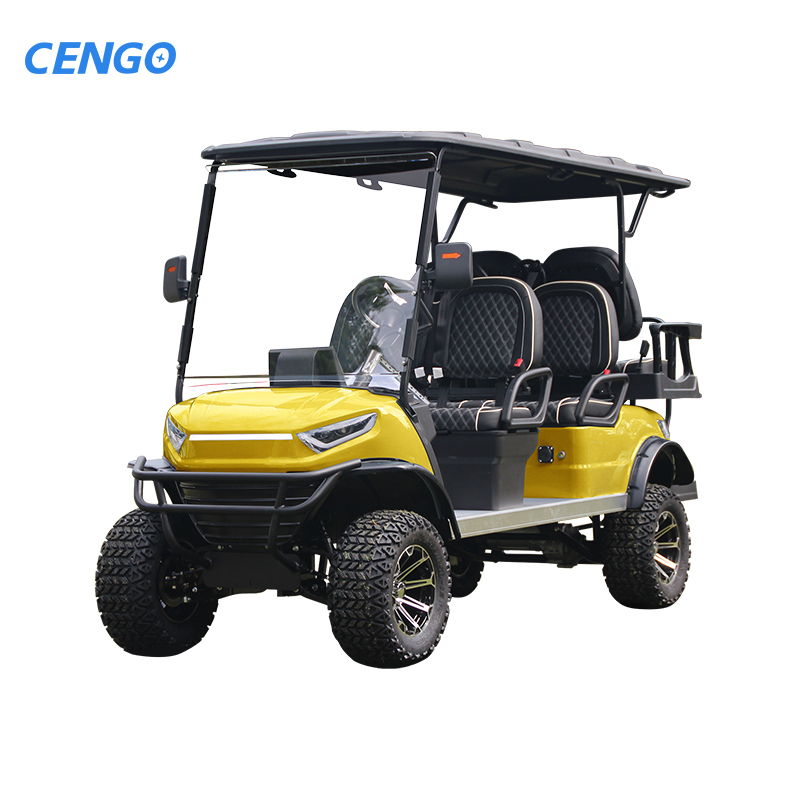
Start smart — why lithium upgrades change the game
Swapping lead-acid for lithium-ion batteries isn’t just lighter weight; it rewrites how you use a 2-seater on short runs and street duty. In neighborhoods across Florida and California where electric cart commutes are common, owners report clearer day-to-day gains when packs, a good BMS, and a right-sized controller are matched. If you’re comparing options, check a trusted street legal golf carts manufacturer and look up local rules for electric golf carts street legal operation before you buy.
Concrete upgrades that actually extend range
Start with a quality lithium pack sized in kWh for your use case and a Battery Management System (BMS) that supports cell balancing. Add a programmable controller tuned for efficiency rather than full-throttle acceleration, and choose cells rated for high cycle life and stable discharge. Regenerative braking helps reclaim energy in stop-start neighborhoods; it won’t double range, but it trims consumption on frequent short trips.
Driving habits that multiply battery gains
Gentle throttle, consistent speed, and moderate tire pressure stretch miles more than raw battery capacity. Keep your State of Charge (SOC) between 20–90% for best longevity—deep discharges shorten cycle life. Avoid heavy payloads and sudden acceleration. Small behavior shifts add up: steady 15–20 mph cruising uses far less energy than repeated bursts to 25+ mph.
Checklist: installation and setup essentials
Before you bolt in a pack, verify these items: proper mounting that protects against water, a BMS with temperature sensing, a charger matched to the pack’s chemistry and Ah rating, and a controller that accepts the new battery voltage. Have a qualified technician verify wiring harnesses and fuses to prevent overcurrent issues. Keep a voltmeter and simple diagnostic tools on hand for quick checks.
Common mistakes owners make — and how to avoid them
People often swap batteries without addressing charging, cooling, or the vehicle controller. That makes the pack underperform. Another trap: buying the biggest Ah number without checking the cart’s motor and controller limits—more capacity helps range but adds weight and may require structural reinforcement. Also, never mix cell chemistries or old and new batteries in a single pack; it creates imbalance and early failure.
Quick operational checks (daily and monthly)
Daily: monitor voltage and tire pressure. Monthly: run a capacity check, inspect connectors for corrosion, and review BMS logs for irregular cell voltages or thermal events. If you see repeated high discharge currents, reconsider gear ratio or add a higher-efficiency motor. Simple preventative checks keep the battery performing near its rated kWh and Ah numbers.
Shopping guidance and evaluation metrics
When comparing models or installers, embed practical criteria into your decision. Look beyond sticker specs. Check warranty terms, ask for real-life cycle counts, and confirm whether the vendor supplies firmware updates for BMS and controller. Also, when you search online for replacements or kits, include terms like {main_keyword} and {variation_keyword} in your queries to surface relevant products and installer reviews.
Three golden rules to pick the right upgrade
1) Match voltage and current limits — ensure the pack’s nominal voltage aligns with the motor and controller ratings so you don’t trigger thermal or electrical failure. 2) Prioritize a BMS with per-cell monitoring and thermal cutoff — it’s the single most important safety and longevity feature. 3) Factor system-level weight and mounting — capacity is useless if added mass causes mechanical strain or reduces efficiency.
Wrap and brand fit
Upgrade choices should deliver measurable range and reliability gains when you pair the right lithium chemistry, a tuned controller, and disciplined driving. For neighborhood street-legal builds that need dependable miles and compliant setups, the practical value lands on trusted supply and proper installation — and that’s where thoughtful manufacturers and installers make the difference. CENGO — a sensible fit for owners wanting a complete, street-ready package.
—