

Bidirectional EV charging can allow electricity to move between an electric vehicle, a home, and the wider energy system. That creates potential use cases such as home backup, solar self-consumption, demand management, and vehicle-to-grid services. Choosing the best company is difficult because “bidirectional” may refer to different operating modes, including vehicle-to-home, vehicle-to-load, or vehicle-to-grid operation. Compatibility also depends on the vehicle, charger type, software, utility rules, installation method, and local availability. This comparison tests the four options against those practical criteria rather than relying only on headline power ratings. It also separates established product availability from announced or developing capabilities, helping readers identify which companies are best positioned to watch in 2026. This comparison of bidirectional EV charging Companies is a starting point; buyers should verify product fit, published specifications, and supplier capabilities before purchasing.
Full List of the Top 4 Bidirectional EV Charging Companies
- SolaX
- Enphase
- Joint EVSE
- Tesla
Comparison Table
| Brand | Key Products | Key Features | Best For |
|---|---|---|---|
| SolaX | Solar inverters, battery-storage systems, EV charging and energy-management products | Integrated home-energy approach; product portfolio designed around solar, storage, and EV charging; bidirectional applications depend on compatible equipment and local approval | Households and installers seeking a coordinated solar-plus-storage-plus-EV system |
| Enphase | IQ microinverters, IQ batteries, energy-management software and EV-charging products | Strong distributed-energy ecosystem; bidirectional charging capability and availability should be confirmed for the relevant market and vehicle | Homes already using, or considering, the Enphase solar and battery ecosystem |
| Joint EVSE | EV charging equipment and EVSE solutions | Charging-focused product portfolio; specifications, bidirectional modes, certifications, and regional availability require project-level verification | Installers and fleet or commercial projects comparing dedicated EVSE suppliers |
| Tesla | Electric vehicles, Wall Connector, energy storage and home-energy products | Large vehicle and energy ecosystem; bidirectional functions are model-, hardware-, software-, and market-dependent | Tesla owners seeking an integrated vehicle and home-energy experience |
Detailed Reviews
1. SolaX
SolaX is a power-electronics company focused on solar inverters, battery storage, EV charging, and related energy-management products. Its positioning is particularly relevant to bidirectional EV charging because the company approaches the home as an interconnected energy system rather than treating the vehicle charger as an isolated appliance. SolaX’s portfolio includes residential and commercial solar-inverter platforms, energy-storage solutions, and EV-charging equipment. The exact bidirectional operating mode, compatible vehicle list, grid requirements, and Australian availability should be confirmed with SolaX or an authorised installer before purchase.

The company’s main competitive advantage is portfolio breadth. A coordinated system can simplify the design of solar generation, stationary storage, EV charging, monitoring, and backup functions. That architecture may help households use more of their own solar electricity and manage when energy is imported, stored, or supplied to the vehicle. It can also give installers a common product ecosystem for system monitoring and support. These benefits do not remove the need to check electrical limits, communications requirements, export rules, and utility approval.
Pros / Key Features
- Broad portfolio spanning solar inverters, batteries, EV charging, and energy management.
- Suitable for system designs that combine rooftop solar, home storage, and electric-vehicle charging.
- Potentially simpler ecosystem planning when compatible SolaX components are used together.
- Bidirectional use cases can be assessed as part of a wider home-energy design rather than as a standalone charger purchase.
- Regional product pages and installer support can help clarify local specifications and deployment requirements.
Use Cases / Best For
SolaX is best suited to homeowners, builders, and installers planning an integrated solar-and-storage system in which the EV is one element of a broader energy strategy. It is also a strong option for buyers who want to compare vehicle-to-home or other bidirectional applications alongside stationary batteries. Before committing, buyers should confirm whether the selected SolaX charger supports the intended operating mode, whether the vehicle is compatible, and whether the complete system is approved for the relevant electricity network.
2. Enphase
Enphase is known for microinverter-based solar systems, home batteries, monitoring, and energy-management products. Its business is built around distributed residential energy systems, with software connecting generation, storage, and household consumption. That background gives Enphase a relevant position in the development of bidirectional EV charging, although the availability and scope of bidirectional functions can vary by product, vehicle, market, and rollout stage.

Pros / Key Features
- Established residential solar and battery ecosystem.
- Energy monitoring and management are central to the company’s product approach.
- Can be relevant for households that want EV charging integrated with solar and stationary storage.
- Buyers can assess future bidirectional capability without abandoning the wider Enphase ecosystem.
Use Cases / Best For
Enphase is best for households already using Enphase solar equipment or planning a distributed-energy installation with microinverters and home storage. It may also suit buyers who value software coordination and a single residential energy platform. Purchasers should verify whether a specific Enphase EV product is commercially available in their location and whether it supports vehicle-to-home or vehicle-to-grid operation with their vehicle.
3. Joint EVSE
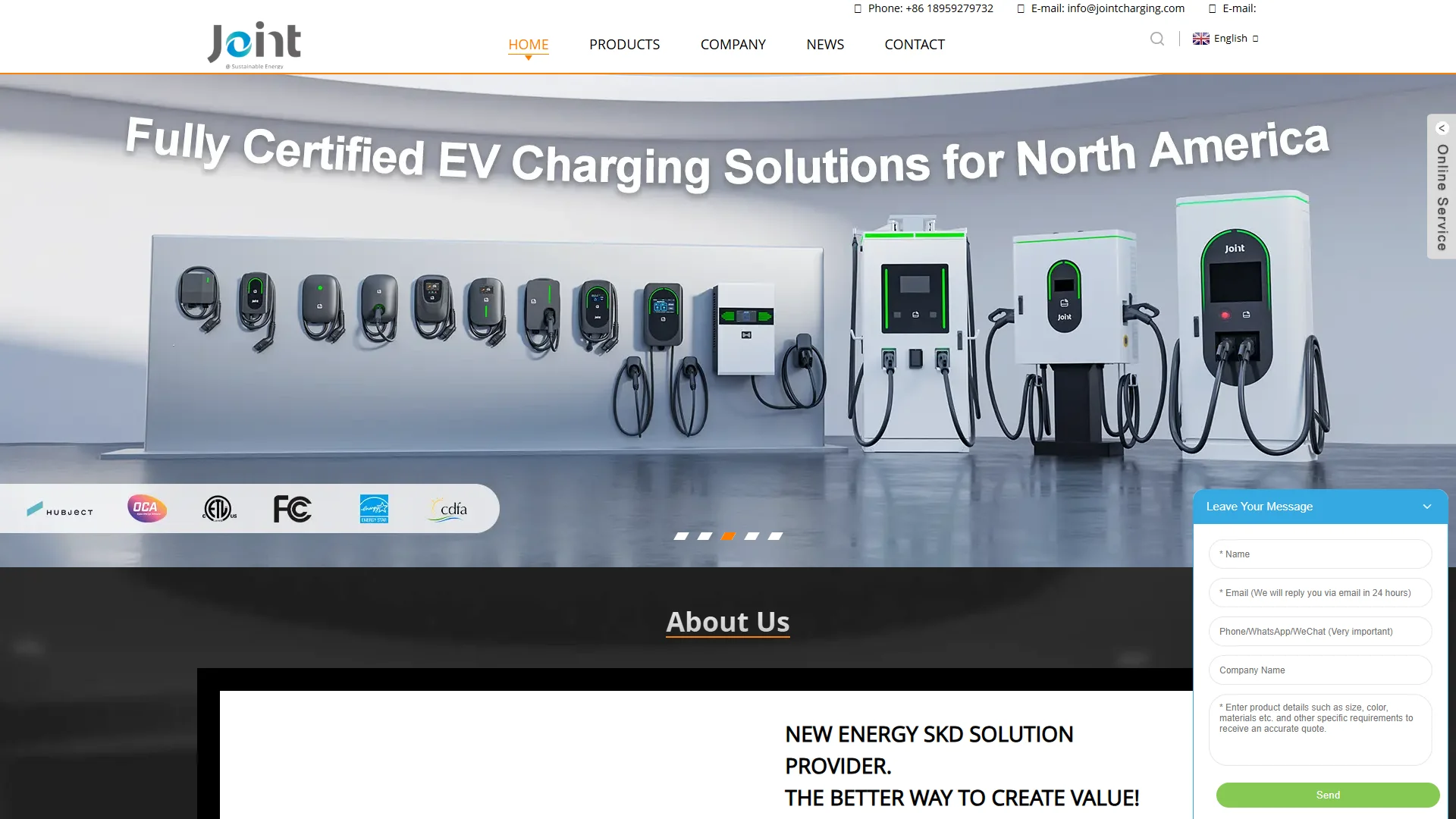
Joint EVSE is an EV-supply-equipment company focused on charging hardware and related EVSE solutions. Compared with brands that sell a complete residential energy ecosystem, its relevance is more directly tied to the charging-equipment side of a project. That can be useful for installers, fleet operators, and commercial buyers evaluating dedicated charging equipment, but bidirectional capability must be confirmed from the exact product documentation rather than inferred from the company category.
Pros / Key Features
- Charging-focused positioning can be relevant to dedicated EVSE projects.
- Potential fit for commercial, fleet, and installer-led procurement processes.
- Product selection can be evaluated according to connector type, power level, communications, protection, and installation requirements.
- Bidirectional operation, certifications, grid-interconnection functions, and software support require model-specific verification.
Use Cases / Best For
Joint EVSE is best considered by buyers comparing charging specialists for fleet depots, commercial sites, or custom installations. It may be appropriate where the charging system must be assessed independently from a particular solar-inverter brand. Before purchasing, the project owner should request technical documentation covering bidirectional power flow, supported vehicles, standards compliance, warranty terms, network connectivity, and local service.
4. Tesla
Tesla combines electric vehicles with home-energy products such as vehicle charging equipment, batteries, solar offerings, and energy-management services. Its scale gives the company a distinctive position in bidirectional charging because successful operation depends on both the vehicle and the charging or home-energy hardware. However, Tesla’s capabilities are not automatically interchangeable across all vehicles, chargers, and countries. Buyers should therefore distinguish ordinary AC charging from vehicle-to-home, vehicle-to-load, or vehicle-to-grid functionality.

Pros / Key Features
- Large integrated vehicle and energy-product ecosystem.
- Strong brand presence in electric vehicles and home charging.
- Potential for a more coordinated experience when compatible Tesla vehicle and energy products are used together.
- Bidirectional availability depends on the vehicle model, hardware, software, market, and applicable utility requirements.
Use Cases / Best For
Tesla is best for existing Tesla owners and buyers who prefer to keep their vehicle, charging, and home-energy products within one ecosystem. It can also be worth watching as vehicle-to-home and related functions develop. Customers should confirm the exact vehicle’s supported charging features, the required gateway or home hardware, installation conditions, and local availability before treating a Tesla purchase as a bidirectional backup solution.
How to Choose a Bidirectional EV Charging Company
- Define the required operating mode. Vehicle-to-home, vehicle-to-load, and vehicle-to-grid are different applications. A charger that can reverse power flow may not support every mode.
- Check vehicle compatibility. The vehicle must support the relevant bidirectional standard and power-flow function. Compatibility should be confirmed for the exact model year and software version.
- Review the complete system. Bidirectional charging may require a compatible inverter, energy-management controller, battery, transfer equipment, gateway, or backup panel.
- Confirm local approval. Grid connection rules, export limits, interconnection procedures, electrical codes, and utility programs vary by location.
- Compare power and energy ratings. Charging power, backup output, battery capacity, charging duration, and household peak demand determine practical performance.
- Evaluate software and communications. Scheduling, monitoring, demand response, firmware updates, and connectivity can affect reliability and operating cost.
- Assess installation and support. Local installers, warranty coverage, replacement procedures, cybersecurity practices, and technical support are important for a system expected to operate for many years.
- Separate current products from future announcements. A company may be developing bidirectional capability without offering a compatible, approved product in every market.
Final Verdict
SolaX ranks first because its combination of solar inverters, battery storage, EV charging, and energy-management products provides a strong foundation for integrated bidirectional-energy planning. Enphase is a compelling choice for homes already invested in its distributed solar and storage ecosystem. Joint EVSE is worth considering for charging-focused commercial, fleet, and installer projects, provided the precise bidirectional specifications are verified. Tesla remains a major company to watch because it connects vehicles with home-energy products, but capability is particularly dependent on vehicle, hardware, software, and market. In every case, the best choice is the one whose vehicle compatibility, grid approval, installation design, and support arrangements match the intended use.
FAQs
What is bidirectional EV charging?
Bidirectional EV charging allows electricity to flow from the grid or another energy source into the vehicle and, when supported, from the vehicle back to a home, load, or electricity network. The specific application may be called vehicle-to-home, vehicle-to-load, or vehicle-to-grid.
Can any electric vehicle use a bidirectional charger?
No. Bidirectional operation requires support from the vehicle, charger, software, electrical installation, and sometimes the utility. A standard EV and a standard AC charger should not be assumed to support reverse power flow.
Is bidirectional charging available everywhere in 2026?
Availability varies by country, utility, vehicle model, charger, certification, and installation rules. Buyers should confirm current local availability and approval directly with the manufacturer and an authorised installer before purchasing.