

Problem: Why large gas gensets miss expected output
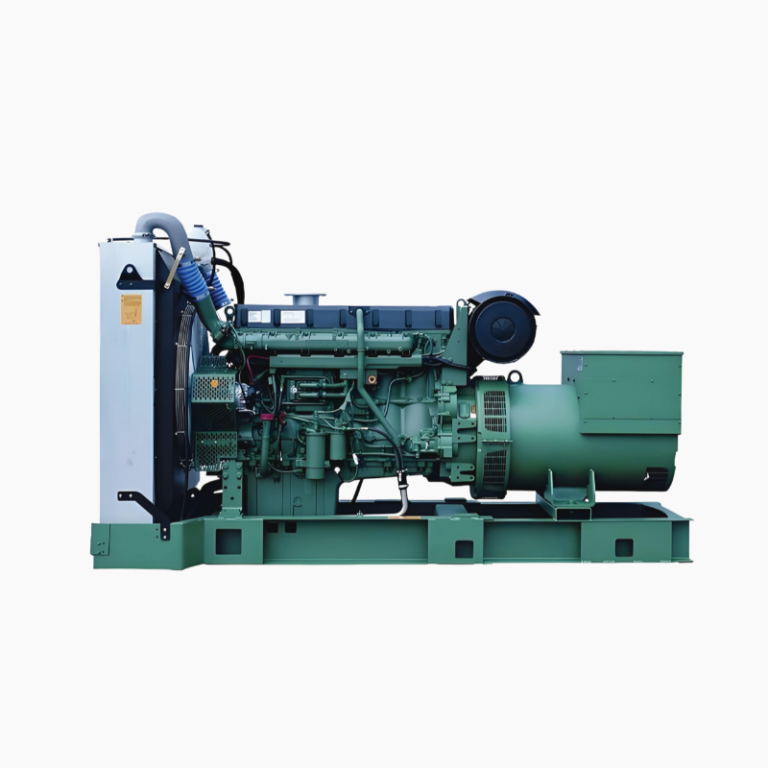
Large gas gensets frequently underdeliver because operators treat them like simple power boxes instead of systems. Loads drift, fuel quality varies, cooling systems glaze over, and controller settings age. When uptime matters — as during the August 2020 California rolling blackouts where backup capacity kept critical facilities alive — those degradations show. Start with a baseline: inspect the volvo genset installation, record nameplate kW, and map the intended duty (prime power vs. standby). This clarifies whether the issue is configuration, maintenance, or system integration.

Assess: Rapid technical triage to isolate causes
Use a structured checklist. Confirm fuel pressure and quality; log inlet air temperature and cooling loop delta‑T; test alternator insulation resistance and output waveform; verify governor response and droop settings. Run a controlled load bank session to compare measured kW against rated output. Capture these metrics: steady-state kW, transient voltage dip under step load, and fuel consumption at 75% load. These numbers reveal whether the genset meets specification or needs adjustment.
Tune: Practical steps to restore rated performance
Adjustments are deliberate and measurable. Recalibrate the governor and set correct droop for synchronization. Clean or replace air filters and verify turbocharger boost (if present). Balance cooling via pump flow checks and thermostat verification. For alternator issues, correct exciter voltage and check AVR gain to fix voltage regulation. If fuel gas composition changed, retune the air–fuel ratio to avoid knock and loss of power. Each change should be followed by a load-bank run and a spectrum analysis of electrical output.
Integrate: Control, protection, and synchronization best practices
Proper integration prevents repeated faults. Implement staged start logic, clear anti‑islanding protection, and defined synchronization parameters. Use a modern controller with event logging and remote telemetry so you can see governor speed, excitation, and phase angle in real time. If paralleling multiple units, test automatic load sharing and shed priorities under simulated faults. Maintain a strict schedule for firmware updates and parameter audit to stop creep in control settings.
Common mistakes and how to avoid them
Operators often skip calibrated testing — then chase symptoms. They ignore fuel filtration changes, which causes injector fouling and reduced kW. They accept elevated coolant temperatures instead of tracing radiator fouling. Avoid these pitfalls by enforcing periodic load-bank verification and replacing consumables on condition and on schedule. Keep written acceptance tests after any overhaul: torque specs, valve clearances, and a signed load‑bank report.
Tools and checks that pay for themselves
Invest in a portable power analyzer, a combustible gas detector for fuel trims, and a calibrated tachometer. Use infrared thermography to spot hot bearings and poor electrical connections. Document vibration baselines: increases can indicate bearing wear or misalignment that saps alternator efficiency. These are low-scope additions that cut failure rates and restore prime power capacity quickly.
Real-world anchor and lessons learned
Facilities that survived regional outages in 2020 reported the same top fixes: fuel filtration, controller audits, and load-bank validation. Those steps eliminated about 80% of unexpected derates in the field — practical evidence that routine, measured work beats ad hoc fixes. When integrating mid-sized units like a volvo 250kva genset, apply the same calibration discipline: torque and electrical verification scale down cleanly from 1000 kW systems.
Summary of actionable steps
Record baseline performance. Run scheduled load-bank tests. Tune governor, AVR, and fuel systems. Keep remote telemetry and an audit trail. Replace consumables proactively. These steps form a repeatable maintenance loop that preserves rated kW, stabilizes voltage, and reduces fuel variance.
Advisory: Three golden metrics to choose and monitor
1) Delivered kW vs. nameplate at 75% load — use this for capacity planning. 2) Voltage regulation (±%) under 0–100% step load — indicates AVR and exciter health. 3) Fuel consumption per kWh over a month — triggers fuel system or combustion tuning when it drifts beyond tolerance. Track these and you’ll spot trouble early.
Apply these practices systematically and the value becomes obvious — lower downtime, predictable output, and simpler spare parts management. Huadong Power. – small steady gains matter.
{main_keyword} {variation_keyword}