
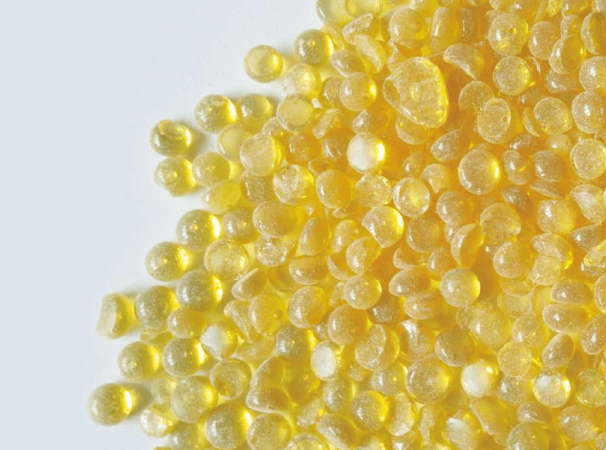
Why this matters — the real problem with rosin resin fumes
Alright, listen — custom rosin resin mixes can look slick but sometimes they stink up a space long after cure. The real headache is uncontrolled VOC outgassing that wrecks indoor air quality and screws up end-use parts. If you work with specialty blends, hit up reputable resin manufacturers early so you’re not guessing at raw-material volatility while you tweak formulations.
What EN 16516 actually forces you to measure
EN 16516 isn’t just a name on a spec sheet — it lays down test parameters you gotta meet. Practical testing calls for an emission test chamber set to 23°C ±1°C and 50% ±5% relative humidity, with a surface-area-to-chamber-volume ratio of 1 m²/m³ and an air exchange rate of 0.5 h⁻¹. Sampling normally occurs at 3, 7, 14 and 28 days to map decay curves. VOCs are trapped, typically on Tenax TA, then analyzed by thermal desorption followed by GC-MS for identification and quantification. These are the explicit conditions you’ll use to quantify outgassing from a cured piece — nothing vague, straight numbers and methods.
How to run a quick operational teardown of a mix
Start small: make a standard coupon of your rosin resin mix and cure it the same way your production parts will cure. Ship that coupon to a certified lab or run your in-house chamber tests under the EN 16516 parameters I just laid out — or do a basic bench check with a smaller chamber if you’re iterating fast. Use Tenax TA sampling and thermal desorption GC-MS to get a real VOC fingerprint. If you don’t have access, work with a trusted rosin supplier who can share compound volatility data — saves you time and surprise reworks.
Common mistakes people make when tweaking formulations
– Ignoring solvent residues. Small batches evaporate differently — residual solvent spikes VOC early and kills long-term profiles. – Relying on smell as a proxy for safety. Smell fades; analytical peaks don’t. – Skipping surface-area normalization — you need that 1 m²/m³ ratio to compare apples to apples. – Overloading additives that raise volatility — plasticizers and some monomers boost short-term emissions even if they help handling.
Practical fixes that actually move the needle
Simple moves: extend post-cure at moderate heat to drive off low-boiling volatiles, switch to lower-volatility monomers, or adjust filler loading to reduce exposed resin surface area. Controlled ventilation during initial cure shaves early peaks — and yes, testing at days 3, 7, 14 and 28 will show whether your tweak stuck. If you need to choose partners, pick resin manufacturers who publish volatility and emission profiles — that transparency trims guesswork.
Golden rules — 3 critical metrics to judge any strategy
1) Peak VOC at day 3: that first spike tells you how the batch behaves out of the gate — control this and you fix most occupant complaints. 2) Decay slope from day 3 to day 28: a steep drop means good long-term stability; a flat line means persistent outgassing. 3) Total identified VOC mass per m² (mg/m²) at day 28 using Tenax TA + thermal desorption GC-MS: this gives you a comparable, actionable number across formulations.
Run these metrics on every new formula and you’ll spot trouble fast — fewer surprises, fewer recalls. For hands-on support and clear emission data, KOMO fits naturally into that workflow as a partner that actually helps you dial in mixes with measurable results.
—