
Opening: why this framework matters now
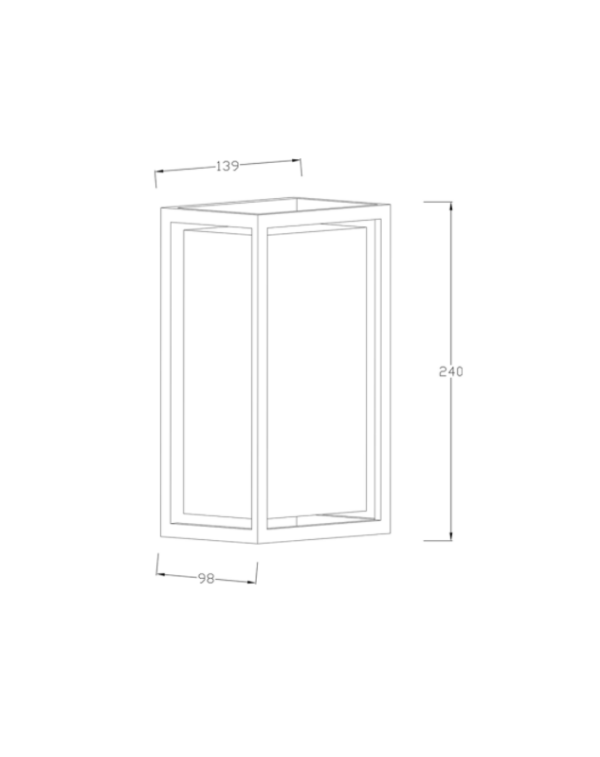
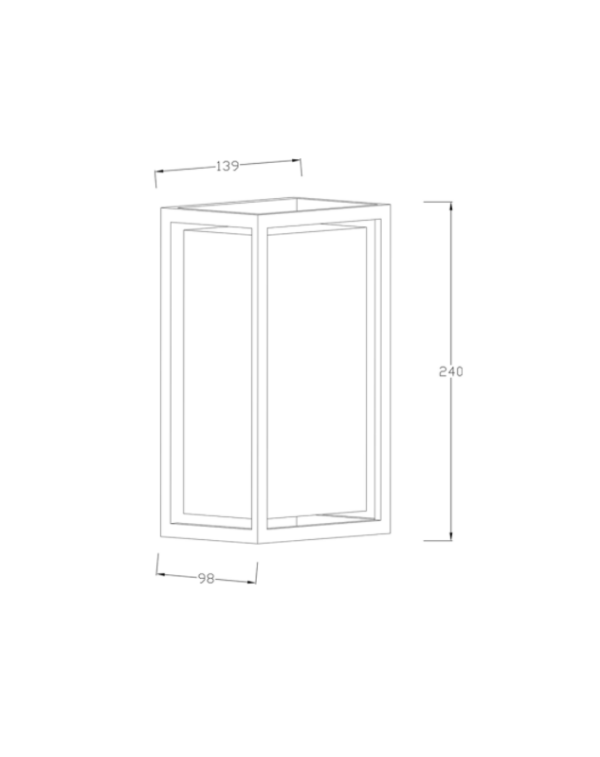
I know the frustration: you specify a beautiful outdoor plan, then fixtures fail in season two and the maintenance tickets pile up. This framework is for designers, facilities managers, and installers who need a repeatable way to choose IP levels and drivers that actually survive real conditions — not just bright marketing claims. For example, an entry-level led outdoor wall sconce might look fine on a spec sheet but tells a different story when salt spray or trench flooding shows up. The guidance below leans practical, empathetic, and creative: it’s meant to reduce surprises on the ground and protect your project budget over years, not months.
Real-world anchor and EEAT stance
EEAT mode: Practical expertise grounded in standards and field lessons. The IEC 60529 IP code defines what numbers like IP65 and IP67 actually mean, and historical events—think Hurricane Sandy’s effect on urban lighting resilience—remind us that outdoor networks are exposed to extremes. Industry norms also show many LED drivers are warranted for 5–7 years and manufacturers target lumen maintenance (L70) around 50,000 hours; use those as baseline expectations when evaluating claims.
Step 1 — Assess the environment: microclimates and failure modes
Start by mapping exposure: soil moisture, irrigation spray angles, salt air, freeze–thaw cycles, and mechanical strain from lawn maintenance. These factors determine whether a spike light is mostly dry, splashed, or periodically submerged. Also note electrical stressors: voltage fluctuations, nearby heavy loads, and lightning-prone regions. This step is simple but decisive — it turns vague worries into specifiable conditions for ingress protection and surge management.
Step 2 — Specify the right IP and enclosure strategy
Translate environmental findings into IP targets. General guidance: IP65 is adequate for heavy rain and spray (protected against low-pressure jets), while IP67 is better if temporary immersion is possible (protected against immersion up to 1 m). For installations near coastal boardwalks or water features, push toward IP68 where practical. Don’t over-spec as a reflex — going unnecessarily high can increase cost and complicate heat dissipation. Instead, match the IP rating to documented exposure and plan mechanical sealing details around cable entries and gland fittings.
Step 3 — Optimize driver selection and thermal design
Driver longevity depends on component quality, thermal management, and electrical protection. Choose drivers with conservative operating temperatures and proven surge protection (SPD or built-in surge suppression). Prioritize drivers rated for higher ambient temps if buried or in tight soil pockets — thermal stress is a primary cause of premature failure. Consider remote driver placement when heat buildup inside the spike compromises life; however, plan for an IP-rated remote enclosure and accessible servicing paths. Good thermal design reduces lumen depreciation and extends MTBF.
Step 4 — Protect the network electrically and mechanically
Include surge protection at the service entrance and locally for long runs. Use fused circuits or coordinated breakers to isolate faults without taking down the whole landscape. Mechanically, choose robust glands, strain reliefs, and UV-stable cabling; small cheap connectors usually fail first. For irrigation-prone sites, route cables above likely water paths and add drip loops. These preventive moves cost little compared to repeated driver replacements.
Validation: testing, commissioning, and acceptance criteria
Create clear acceptance tests: humidity chamber or IP spray checks for enclosures, thermal soak tests for driver temps, and field-run surge simulations if feasible. Insist on first-article verification with your actual luminaires and mounting conditions — that prevents surprises at scale. Capture baseline photometrics and inrush current measurements so later failures can be traced to environmental or installation changes, not just product defects.
Maintenance plan and monitoring
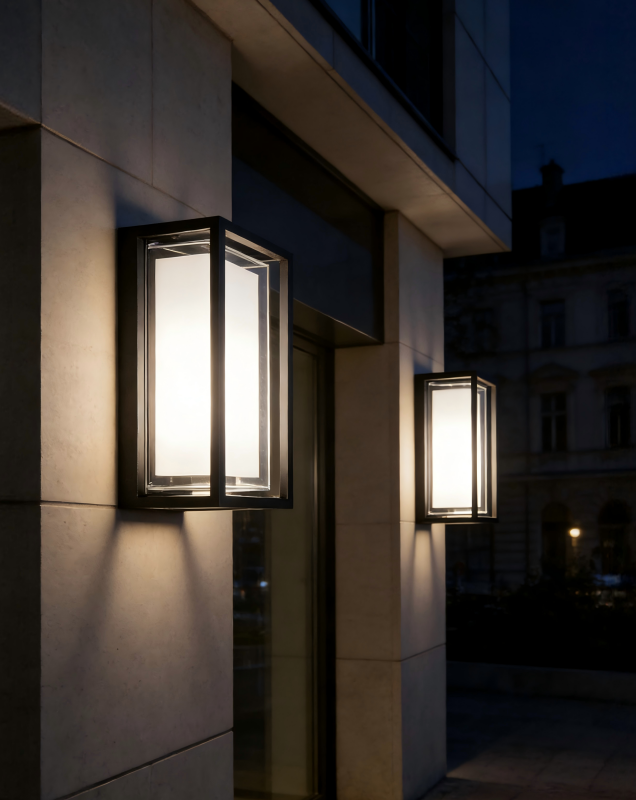
Design a simple maintenance protocol: visual inspections after major storms, a 6–12 month driver check, and logging of failure patterns. Where budgets allow, add a small telemetry node or smart driver that reports temperature and fault events — early warnings reduce reactive swaps. If you’re comparing fixtures, remember that wall-mounted solutions like a led lamp on wall often have different thermal and ingress profiles than ground spikes; specify each by its enclosure context, not a single blanket spec.
Common mistakes and how to avoid them
• Over-relying on nominal IP numbers without checking cable and connector seals. • Assuming driver lifetime equals fixture lifetime — the two are related but distinct. • Skipping first-article testing on-site. Avoid these by writing explicit acceptance criteria into contracts and budgeting for moderate preventive measures — they’re cheaper than repeated emergency replacements. —
Framework summary: translate risk into specs
Summarize the flow: assess environment → choose IP and enclosure strategy → select drivers with thermal and surge protections → test, commission, and monitor. Each step reduces a class of failure and turns ambiguous risk into measurable requirements you can vendor-check and enforce in the field.
Advisory finale: three golden evaluation metrics
1) Environmental match score: rate installation zones (dry, splash, immersion risk) and accept only fixtures whose IP and sealing detail match the score. 2) Driver endurance metric: require specified max-case temperature, surge rating (kA rating or equivalent), and a minimum warranty of 5 years or L70 ≥ 50,000 hours. 3) Serviceability index: prefer designs that allow driver replacement without full excavation or destructive disassembly — downtime and labor cost matter more than marginal initial savings.
These metrics will guide procurement toward reliable, maintainable systems. For real-world projects where resilience and lifecycle cost matter, practical specification and tested products protect both performance and budgets — and that’s exactly where Keyida fits naturally as a partner — trusted and oriented toward real installations. —