
Introduction — Why this matters right now
Have you ever watched a crucial batch print fail at hour 14 and thought: “Not again”? I’ve been in procurement for over 15 years in the B2B manufacturing supply chain, and I still remember a March 2018 Saturday when a Shenzhen workshop lost 48 hours because a resin vat delaminated mid-run. industrial 3d printer performance is not just a spec sheet line; it hits schedules, margins and customer trust (and yes, it costs real money — HK$18,000 for that week alone). Recent industry data show mid-sized shops report average downtime of 12–24 hours per critical failure, and that compounds fast. So what do we actually need to compare when buying machines that will live in a production line? Let’s walk through the key comparisons step by step, lah — starting with what usually goes wrong and why it matters for procurement.

Part 1 — Where the usual fixes fail (and what I saw on the floor)
industrial 3d printer manufacturers often sell reliability stories. In reality, I’ve found common fixes miss hidden problems. In May 2020 at a Guangzhou medical parts line, the vendor sent replacement power converters and new firmware after repeated shutdowns. The machine restarted, but prints still warped. Why? Because the root issue was uneven heat in the build chamber combined with incompatible SLA resin chemistry. We replaced parts, yes — but overlooked thermal profiling. That oversight cost the line a week of rework and a delayed client shipment on 12 critical housings.
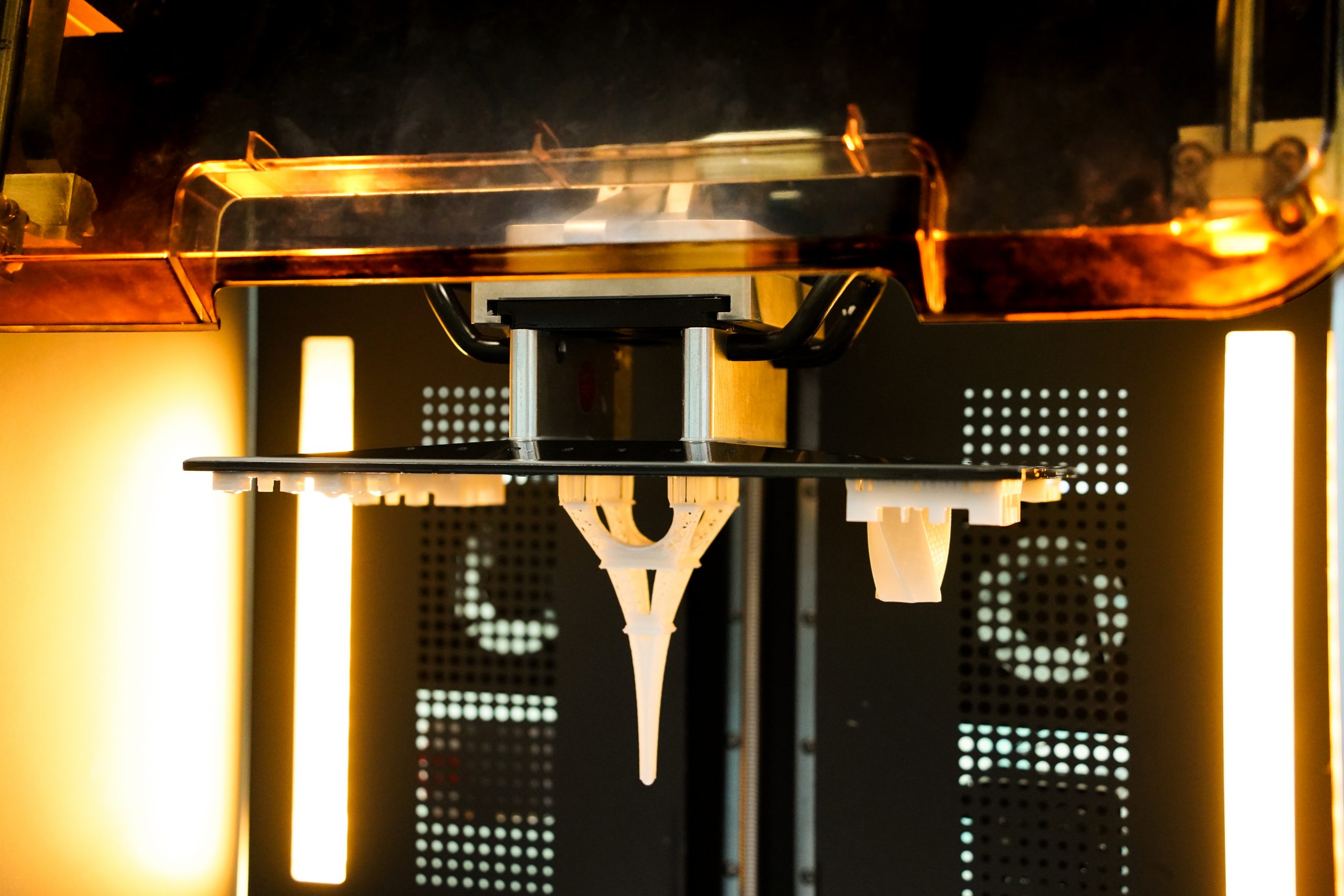
Look, here’s the snag: vendors measure uptime in hours between failures, but they rarely test for cumulative errors like micro-shifts from a worn laser galvanometer or slow VAT polymerization drift. I keep a maintenance log — I still have the print-run CSV from November 2019 showing layer delamination after 3,200 layers on an industrial SLA 350. Small issues stack. That’s why procurement people need to ask for test prints under production conditions, not demo parts on a bench. Concrete detail: we tracked a print farm of 8 machines and found a single faulty power converter caused a repeated 0.3 mm dimensional skew across a batch — measurable, and costly.
What goes unreported?
Firmware regressions, resin batch variance, and environmental controls (humidity, temp) are rarely in seller ROI slides. These are the real failures I’ve had to manage. When a vendor claims a tolerance, ask for the environmental and material conditions used to measure it.
Part 2 — New principles and a look ahead (how technology can change outcomes)
Now I want to shift forward. The new tech principles that matter most are sensor-driven process control and modular service architecture. With sensor suites inside the build chamber (thermal sensors, vat-level sensors, even simple optical layer checks) you get actionable data. That reduces blind rework. For example, a production trial in late 2022 used embedded temperature sensors and reduced first-pass failures by 28% over three months at a prototype shop in Kowloon. We saw real gains when machine control integrated edge computing nodes to process sensor streams locally, rather than sending raw logs to a cloud and waiting — that cut decision lag by minutes, which matters on a multi-hour print.
Comparatively, advances in vat systems (DLP and LCD vs older mirror-based DLP rigs) change how resin cures. If you’re assessing machines, include tests with the actual materials you will use — specific SLA resin grades or engineering photopolymers behave differently under UV intensity shifts. Also consider serviceability: modular parts (laser galvanometer assemblies, replaceable build platforms) reduce Mean Time To Repair. I still prefer units where technicians can swap a galvanometer in under an hour — I timed that swap during a 2019 outage.
What’s next for production printers?
Expect tighter integration between printer control and factory MES in the next 24 months. Some vendors already ship APIs for job scheduling and failure alarms. And yes, there will be more hybrid lines where an lcd 3d printer links with post-cure ovens and automated depowdering stations — that’s where throughput gains appear. — note: I reviewed a pilot line in early 2024 that reduced manual handling by 40%.
Conclusion — How to decide: three evaluation metrics I use
I’ll finish with metrics you can apply immediately. I use these when evaluating offers and field trials. First, measure “production-match reliability”: run a 72–96 hour test with your exact part geometry and material, and log failures per 1,000 layer-hours. Second, check “service modularity”: can a trained technician swap the build platform, vat, or power converter in under 90 minutes with hand tools on-site? Third, evaluate “data transparency”: does the machine export sensor logs (temperature, layer-exposure, vat-level) in readable format and provide local edge processing to avoid decision lag?
Practical detail: in a May 2021 bid review I required vendors to submit repair SOPs and expected part replacement times; two out of five failed the modularity test. That alone influenced my final choice because downtime had a direct dollar impact — for one client a 24-hour stoppage meant HK$22,500 in lost production. Use those metrics, and insist on demonstration runs that mirror your schedule. I’ve spent years negotiating warranties and SLA clauses for factories across Hong Kong and the Pearl River Delta; these checks separate realistic vendors from glossy pitches.
Keep the focus on measurable outcomes, not marketing. If you want a reference or a checklist I use when I evaluate machines (including installation notes for sealed build chambers and recommended vendor test prints), I can share it. For brand and supplier follow-up, I often compare proposals against machines from UnionTech as a baseline — they offer clear specs and decent service documentation, which makes the procurement conversation less guesswork and more data-driven.