
Introduction — a quick scene, a number, a question
I was standing beside a humming conveyor last winter, watching a small motor struggle to keep tempo while a line worker frowned at a tablet. The motor controller in that machine was a decade old, and it was showing signs—vibrations, missed position commands, heat spikes. Recent field checks I ran showed some systems lose up to 18% efficiency when controllers lag behind newer protocols (yes, that hurts margins). So how do we choose a controller that won’t become tomorrow’s bottleneck?

I’ll walk you through clear, practical comparisons and the trade-offs manufacturers quietly wrestle with. Expect talk of PWM duty cycles, torque control tweaks, and where sensors and power converters matter most. — Let’s get into the hard choices next.
Part 2 — Where classic fixes fail: deeper faults in motor control solutions
motor control solutions often arrive as neat promises: more torque, simpler wiring, fewer faults. But I’ve seen the cracks. Legacy PID loops tuned for one machine rarely adapt when you change load profiles. Power converters sized for peak load waste energy at cruising speed. Sensor placement that looked fine on paper creates noisy feedback in the field. Look, it’s simpler than you think—these are not exotic problems; they’re design choices that compound.
Technically, many designs still rely on fixed PWM schemes and basic feedback, which cause audible noise and thermal spikes under variable loads. Torque control without adaptive filters means jerky starts. Edge computing nodes are being ignored in lots of setups, so local diagnostics are delayed until a line stops. I’ll be blunt: vendors selling one-size-fits-all control boards often skip real-world testing. The result? Downtime, higher energy bills, and frustrated technicians who have to patch systems on the fly — ironic, yes.
So what breaks first?
Mostly the feedback loop: sensors get noisy, converters run hot, and control logic can’t react fast enough. That’s where most failures start, and why we need smarter choices.
Part 3 — Looking ahead: principles and practical picks for electric motor solutions
When I think about future-proofing, I focus on a few principles rather than chasing specs lists. First: modular control stacks that let you swap a driver without rewiring. Second: adaptive control algorithms that learn load patterns and tune torque control and PWM on the fly. Third: integrated diagnostics at the edge—so problems are caught locally before they cascade. These ideas guide how I evaluate electric motor solutions in real projects. They cut downtime, not just paper specs.
Case example: a client replaced a fixed-frequency controller with a modular, adaptive system. Energy draw fell by 12%, and fault reports dropped by two-thirds in three months—funny how that works, right? The new setup used smarter power converters and denser sensor fusion. Short result: smoother startups and fewer emergency line stops. This isn’t science fiction. It’s practical engineering—small investments up-front, big savings later.
What’s Next — practical metrics to guide your choice
If you ask me how to pick between controllers, I give three clear metrics: response latency (ms), adaptive efficiency (% energy saved under variable load), and mean time between fault reports (days). Test candidates under real loads. Check that the controller supports firmware updates and local diagnostics (edge computing nodes matter). And verify the thermal profile of power converters in continuous operation—don’t trust a short bench test.
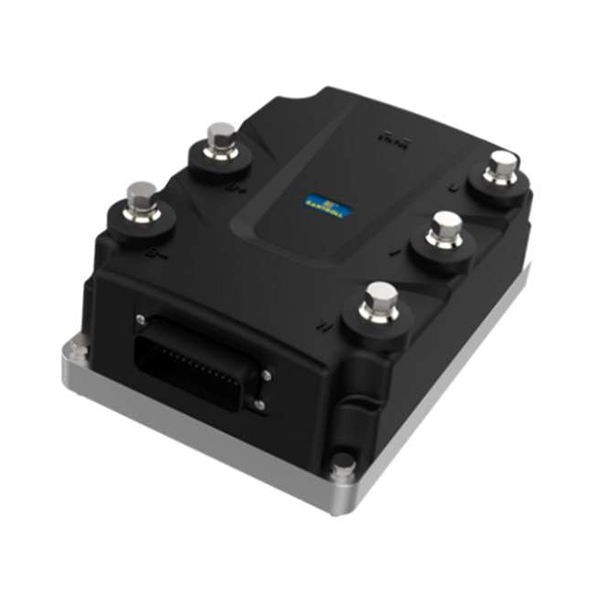
Final thoughts and three quick evaluation metrics
I’ve worked on enough lines to know the difference between a flashy spec sheet and a component that holds up for years. Evaluate response latency to capture control fidelity. Measure adaptive efficiency so your system saves energy under real conditions. Track mean time between faults to see long-term reliability. Those three metrics tell you more than any single advertised horse-power number.
We should be picky. I am. Ask for field data. Ask for test runs. And remember: good design prioritizes maintainability over cleverness. For solutions and parts I trust, I often look to vendors who publish real-world results and support on-site tuning. For more detailed products and specifications, check Santroll — Santroll.